
Level 508
EXPERTHow to solve Sand Loop level 508? Get instant solution for Sand Loop 508 with our step by step solution & video walkthrough. Sand Loop 508 tips and guide.
Play Sand Loop Now
Experience the puzzle challenge firsthand
Game Screenshots
Sand Loop Level Guides
Level 508 Overview: The Pixel Art Dinosaur Challenge
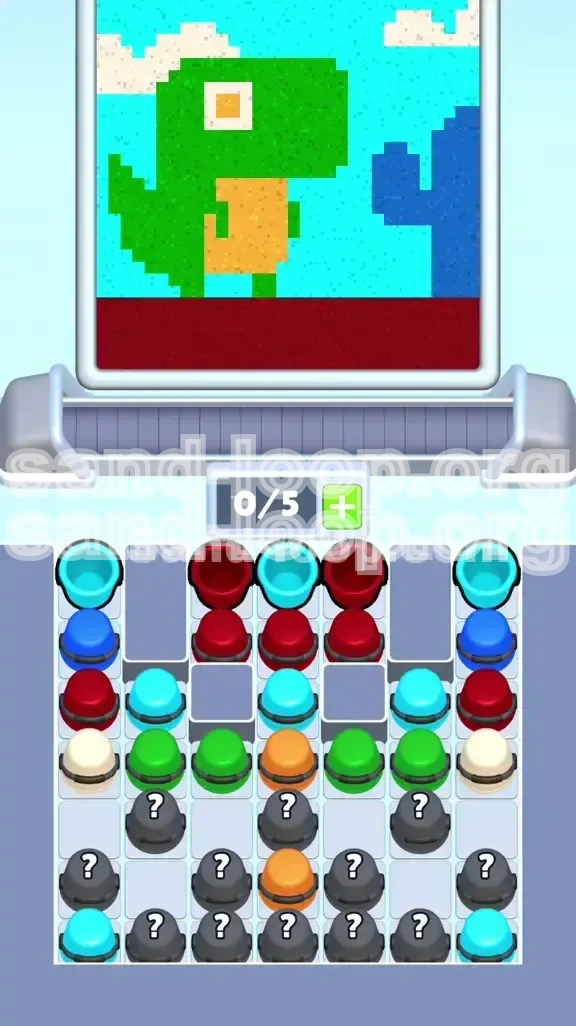
Welcome to Level 508, widely known as the "Pixel Art Dinosaur" stage. This level is a pure test of logic and inventory management rather than reflexes. The visual goal is charmingly retro: constructing a scene featuring a green T-Rex and a blue cactus against a vast desert sky. However, the gameplay is brutally strict. You are dealing with a 5-slot inventory limit on your conveyor belt and a grid cluttered with "Mystery Cups." The challenge here isn't just about matching colors; it is about preventing your belt from locking up due to poor planning. If you are someone who relies on fast tapping, this level will force you to slow down and think strategically.
The Inventory Constraint
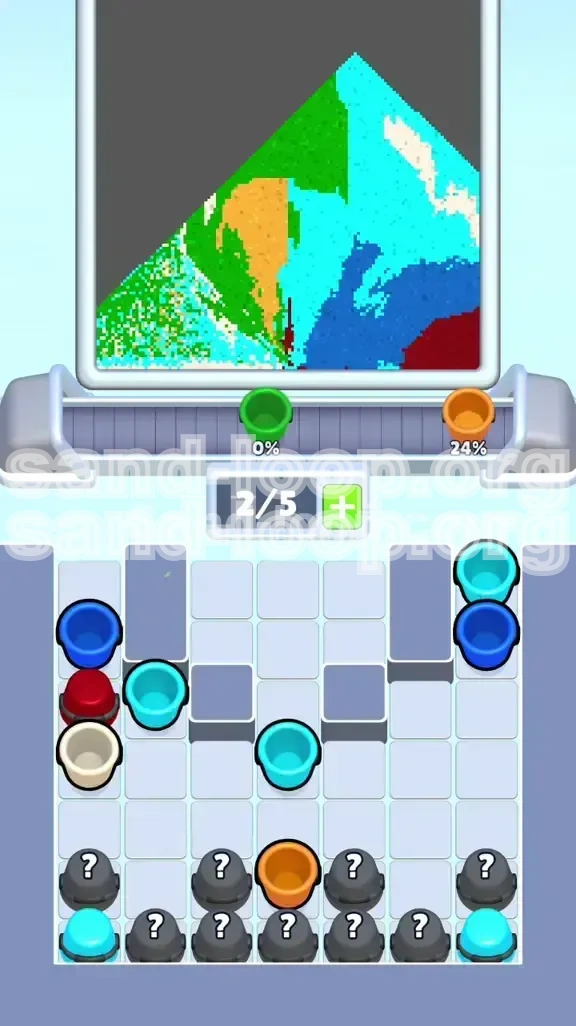
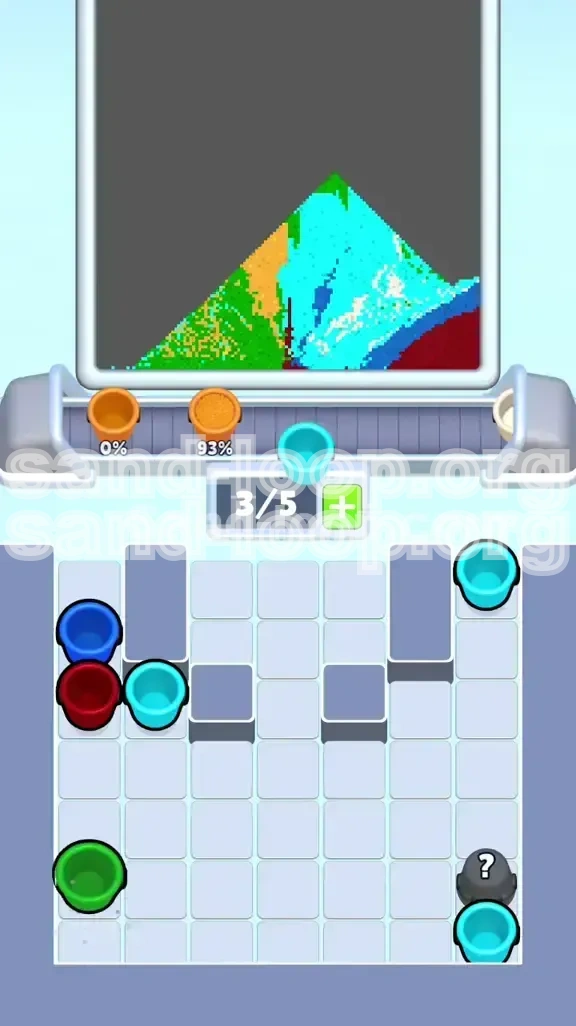
The most critical mechanic in Level 508 is the hard limit on your conveyor belt. You can only hold exactly five cups at any given time. Unlike other levels where you might get away with clogging your belt for a few seconds, here, a full belt means a deadlock. You cannot fetch new sand from the tray if your hand is full. This means every click must be intentional. You cannot simply grab everything you see; you must grab only what you can process immediately.
The Mystery Cup Mechanic
Approximately 40% of the supply tray consists of Mystery Cups—black containers with white question marks. These act as wildcards. You cannot see their color until they are pulled onto your belt. This introduces a significant gambling element to the level. If your belt has 4 empty slots, pulling a Mystery Cup is safe. If your belt has 4 cups already, pulling a Mystery Cup is a high-risk gamble that could end your run. Learning when to take this risk is key to beating the level.
Visual Target Analysis
The image is divided into four distinct color zones. The Light Blue background occupies approximately 50% of the canvas. The Dark Red ground floor accounts for about 20%. The Bright Green T-Rex takes up 25%, and the remaining 5% consists of tiny details like the Dark Blue cactus and the White eye. The vast difference in area between the background and the details dictates your strategy: clear the large areas first to open up the board.
Grid Layout and Blockades
The supply tray is plagued by grey divider walls that restrict vertical access. You cannot simply pull any cup you want; you are often forced to clear a vertical column to reach the cups buried underneath. This creates a "dependency chain" where you must clear unwanted top-layer colors just to reveal the essential colors hidden beneath them.
Why Logic Beats Speed
There is no timer in Level 508. The pressure comes entirely from the potential to deadlock your board. If you fill your belt with the wrong colors, you have no moves left. Success in this level is not about how fast you can tap, but how accurately you can predict the needs of the pouring nozzle versus the contents of your supply tray.
Strategic Color Order and Priority
To beat Level 508, you cannot simply pull colors as they appear. You must follow a strict hierarchy based on the size of the areas and the availability of colors. Random tapping will lead to a clogged belt within seconds.
Priority 1: The Light Blue Sky
Why: The sky is the largest single area on the canvas. It requires a massive volume of sand. Furthermore, Light Blue cups are abundant in the top rows of the supply tray.
Action: Pull Light Blue cups constantly throughout the early and mid-game. The nozzle for the sky is almost always active, making it the perfect "dumping ground" for excess cups. You want to keep the Light Blue flow moving to free up grid space.
Priority 2: The Dark Red Ground
Why: The ground is the second largest area. Dark Red cups are located directly beneath the initial Light Blue blockers in the central columns.
Action: Once the top layer of Light Blue is cleared, immediately pivot to Dark Red. Do not let Dark Red cups sit on your belt; use them up quickly to make room for the more complex colors coming later.
Priority 3: The Bright Green T-Rex Body
Why: This is the main subject of the pixel art. While the area is smaller than the ground, the Green cups are often trapped underneath Mystery Cups or Red cups.
Action: Only focus on Green after the ground and sky are partially established. You need to clear the lower half of the grid to access the bulk of the Green supply.
Priority 4: The Dark Blue Cactus
Why: The cactus is a medium-sized detail, but it is tricky because Dark Blue can be visually confused with the sky if you aren't paying attention.
Action: Treat Dark Blue as a high-value commodity. Do not pull it until the nozzle is specifically over the cactus area. Accidentally pouring Dark Blue into the sky or onto the Dinosaur will ruin your purity percentage.
Priority 5: The "Micro" Details (White and Tan)
Why: The White eye and Tan belly patches are tiny. They fill up in seconds.
Action: Leave these for absolute last. If you pull a White cup early, it will sit on your belt, occupying a precious slot for the entire level, waiting for that one specific eye pixel to open. This is a classic rookie mistake that leads to gridlock.
Step-by-Step Walkthrough
This section breaks down the exact sequence of moves required to navigate the board from start to finish without getting stuck.
Phase 1: Breaking the Surface
The start of the game is a race to clear the "cap" colors sitting on top of the grid. Your belt is empty, so you have freedom of movement.
Step 1: Locate the Dark Red cups in the top-center of the tray. Tap them immediately. This sends them to the belt and begins filling the ground floor.
Step 2: Immediately look for the Light Blue cups on the far left and right edges. Pull these to start the sky.
Step 3: Alternate between Dark Red and Light Blue. Do not touch the center column yet, as it likely hides the Mystery Cup layer.
Result: You should have a steady stream of Red and Blue moving on the belt, keeping your slots cycling without clogging.
Phase 2: The Mystery Cup Wall
Once the top colors are gone, you will hit a row of black Mystery Cups. This is the danger zone.
Step 1: Stop tapping. Look at your belt. Ensure you have at least 2 empty slots. If you have 4 or 5 cups, wait for the nozzle to pour them out before proceeding.
Step 2: Tap one Mystery Cup.
Step 3: Watch it land on the belt. If it turns into Green or Tan (colors you need later), keep it. If it turns into a color you don't need right now, or if it's a duplicate, you must have a plan to move it.
Tip: Never tap a second Mystery Cup until the first one has been poured or cleared. You cannot afford to gamble two slots on unknowns.
Phase 3: Clearing the Belly and Body
As you reveal the lower layers, you will find the Tan (belly) and Green (body) cups.
Step 1: The nozzle will eventually move to the Dinosaur's belly. This is your cue to clear any Tan cups you have stockpiled or revealed.
Step 2: Once the belly is done, switch focus entirely to Green. The main body requires a lot of sand.
Step 3: Use the Light Blue "buffer" strategy. If your belt gets full of Green, pull a Light Blue cup (since the sky is likely still needing filling) to create space and keep the flow moving.
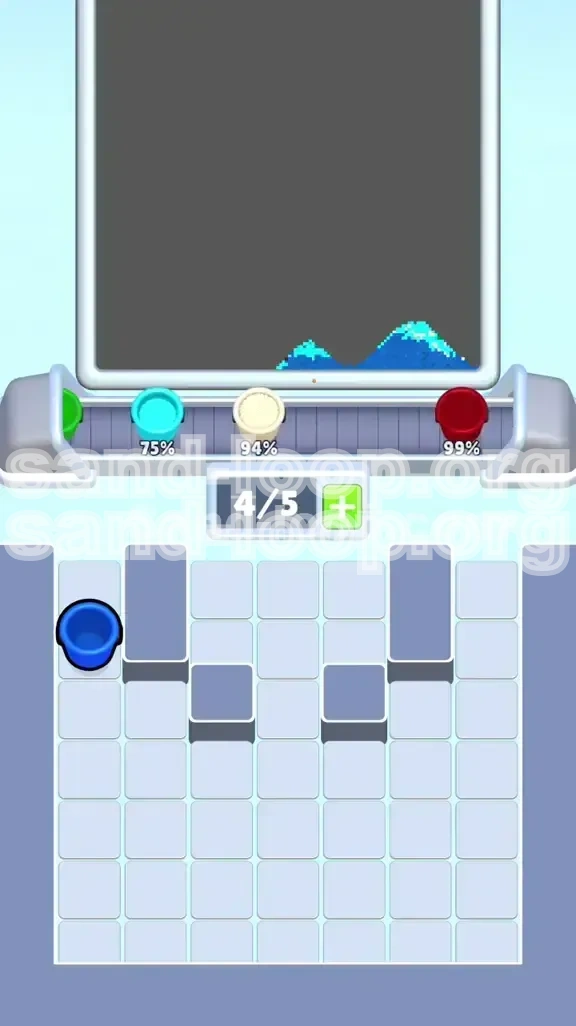
Phase 4: The Endgame Details
With the body and ground gone, the board will look messy with small leftover colors.
Step 1: The White Clouds and Eye are usually the last things to fill. Only pull White cups when the nozzle is physically positioned over the cloud or eye area.
Step 2: Finish the Dark Blue cactus. Be careful not to confuse it with the Light Blue sky.
Step 3: Clean up any stragglers. The nozzle will rapidly cycle through remaining colors. Keep tapping the matching revealed cups to clear the tray.
Common Mistakes and How to Avoid Them
Understanding why players fail is the best way to ensure you succeed. Here are the most common pitfalls in Level 508.
The "Full Belt" Panic
Many players tap the Mystery Cup layer too quickly. They fill their belt with 5 unknown cups. When the colors reveal, they don't match the current nozzle needs. The player is stuck with a full belt of useless sand and cannot pull the correct color from the tray.
Solution: Always keep 2 slots open when approaching Mystery Cups. This "buffer" allows you to pull a known good cup if the Mystery Cup reveals a bad color.
Color Contamination
It is tempting to just pour whatever is on the belt into the current active zone. However, pouring Green sand into the White eye will ruin the level, forcing a restart.
Solution: Watch the pour nozzle carefully. If the nozzle is over the Eye (White), do not pour Green just to free up space. Wait. If the belt is full, you lose, but pouring the wrong color guarantees a loss anyway. Patience is key.
Ignoring the Grid Layout
Players often try to pull a specific color from the bottom row without clearing the top rows first. This is impossible due to the vertical columns.
Solution: Always clear from top to bottom within a column. If you need a Green cup at the bottom, you must accept that you have to pull and process whatever junk is sitting on top of it first.
Hoarding Micro Colors
Pulling White or Tan cups in the first half of the level is a waste of inventory space. These areas fill so quickly that the cup will sit on your belt for 90% of the game.
Solution: Pretend White and Tan cups do not exist until the very end. Focus entirely on the high-volume colors (Blue, Red, Green).
Speed Run and Pro Tips
Once you understand the logic, you can optimize your playstyle for faster completion times and higher scores.
The "Sky Sync" Technique
Since the Light Blue sky covers half the level, the nozzle spends about 50% of the time in the sky zone. Use this to your advantage. If you have a random cup you don't know what to do with, and the nozzle is in the sky, just check if it's Light Blue. If not, don't pour. But if you are efficient, you can sync your belt clears with the sky cycles to constantly refresh your slots.
Mystery Cup Prediction
While the cups are random, there is a pattern. The game tends to spawn colors that you need but not necessarily the ones you want right now. If you see a Mystery Cup, assume it is Green (the most common bulk color). Plan your belt assuming a Green cup is coming, and ensure you are ready to pour Green soon after.
Queue Management
Professional players visualize the next 3 steps. While the nozzle is pouring one cup, they are already looking at the tray to decide which cup to pull next. Don't watch the sand fall; watch the tray. This reduces downtime between pours and significantly lowers your total completion time.
The Reset Point
If you make a mistake in the first 30 seconds (e.g., pull a White cup too early), it is often faster to manually restart the level than to try and play through with a clogged belt. Recognizing a "dead run" early saves time and frustration.